
Key Takeaways
- Snoring in females can result from hormonal changes, weight gain, nasal congestion, aging, or airway anatomy.
- Estrogen and progesterone may help protect the airway, while their decline during menopause can increase snoring risk.
- Pregnancy, alcohol, certain medications, and sleeping on your back can also worsen snoring.
- Persistent snoring with gasping, breathing pauses, morning headaches, or daytime fatigue may indicate sleep apnea.
- Treatment depends on the underlying cause and may include lifestyle changes, a sleep evaluation, or targeted therapy.
For years, snoring was treated as a man’s problem, so many women brush it off. An estimated 28% of adult women snore regularly, yet many may not even realize it.
So why does it start, and does it mean something? Let’s look at what causes snoring in females, from hormones and weight to thyroid changes, and which signs mean it’s time to see a specialist.
Quick Answer
Snoring happens when relaxed throat tissue vibrates as you breathe. In females, common triggers include falling estrogen and progesterone, pregnancy, weight gain, nasal congestion, alcohol, sedating medicines, thyroid problems, and sleep apnea. Snoring with gasping or daytime exhaustion deserves a sleep evaluation.
Why Do Women Snore? The Main Reasons
Before we get into the reasons women snore, let’s quickly answer a basic question: what is snoring?
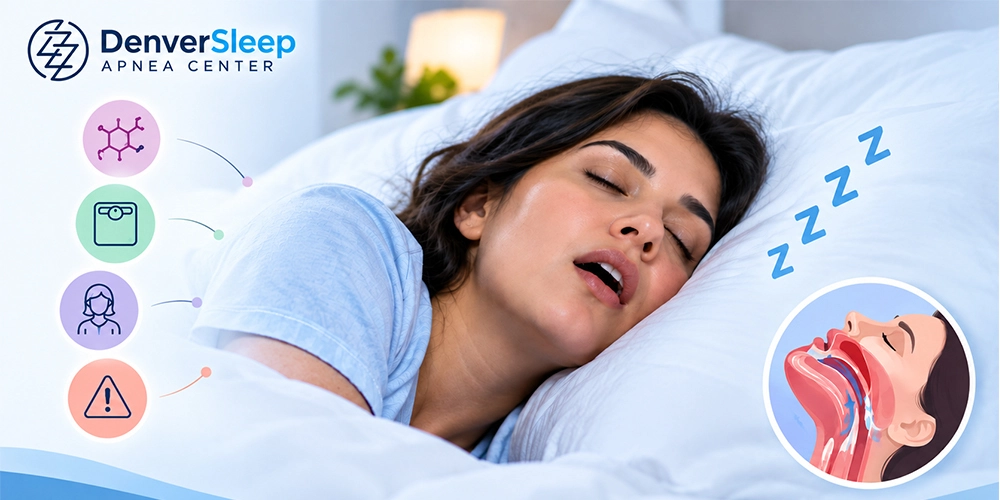
It’s the sound of air squeezing past relaxed throat tissue and making it vibrate. Picture a pinched straw: the tighter the gap, the faster the air moves and the more the tissue flutters.
During sleep, the muscles that hold your throat open relax a little in everyone. Snoring starts when something narrows the space further or loosens those muscles more. The causes fall into three groups:
- The airway gets narrower. Extra weight around the neck, a stuffy or narrow nose, jaw shape, and swelling from an underactive thyroid all take up space.
- The throat muscles get looser. Falling estrogen and progesterone, aging, alcohol, and sedating medicines all lower muscle tone.
- The airway starts to close. In sleep apnea, the airway narrows or collapses again, so snoring can be a warning sign.
Many women have more than one at play, which is why snoring can change over time.
The types of snoring can hint at which group you fall into. Nose-, mouth-, and tongue-based snoring tend to point to different causes. Most snoring studies have focused on men, so research on women is still catching up.
But what if it started overnight?
What Causes Sudden Snoring in Females?
Sudden snoring usually has a trigger. Ask what changed in the last few weeks.
- A cold, allergies, or a sinus infection.
- A new medicine, such as an antihistamine or sedative.
- Evening alcohol.
- Recent weight gain.
- Pregnancy or early perimenopause.
If it lasts more than a few weeks, mention it to your doctor.
Sudden or not, volume matters too.
What Causes Loud Snoring in Females?
Loud snoring usually means airflow is meeting greater resistance somewhere in the upper airway. Several factors can contribute.
1. Nasal congestion
Allergies, colds, chronic rhinitis, sinus problems, or a deviated septum can make it harder to breathe through the nose. Mouth breathing may then become more likely during sleep, contributing to snoring.
2. Sleeping on your back
Sleeping on your back can allow the tongue and other soft tissues to move backward and narrow the airway. For some people, this makes snoring noticeably louder.
3. Weight gain
Weight gain and snoring in women can be connected because additional tissue around the upper airway may reduce the space available for airflow. Excess weight is also an established risk factor for obstructive sleep apnea.
4. Alcohol and poor sleep
Alcohol can relax the muscles around the airway and make snoring worse. Sleep deprivation can also increase throat relaxation.
5. Airway anatomy
A naturally narrow airway, an elongated soft palate, or enlarged tonsils can make snoring more likely. Genetics can also influence airway structure and sleep apnea risk. If sleep apnea runs in your family, you may wonder, is sleep apnea genetic? Family history can increase your risk, but it does not mean you will develop the condition.
These are some of the most common causes, but women can also notice changes at stages of life.
Estrogen and Snoring: How Hormones Change Your Airway?
Estrogen and progesterone appear to help keep airway muscles active. In a study of 774 women aged 40 to 67, doubling estrone levels came with 19% lower odds of snoring. Progesterone showed a 9% drop. That shows a link, not proof of cause.
Snoring During Period
Some women notice changes in snoring during their period. Hormonal fluctuations may affect nasal symptoms and sleep, but the evidence is not strong enough to say that menstruation itself is a universal cause of snoring.
A new pattern that continues after the original trigger has passed is worth discussing with a healthcare professional.
Snoring During Pregnancy
According to the American Thoracic Society, up to half of pregnant women snore at some point during pregnancy. The causes of snoring during pregnancy include hormonal changes that can swell the nasal passages, nasal congestion, and changes in breathing as pregnancy progresses. Weight gain may also contribute by narrowing the upper airway.
Snoring often becomes more noticeable in the third trimester. Although it may resolve after delivery, persistent snoring, especially with gasping or pauses in breathing, should be discussed with a healthcare professional.
Snoring After Menopause: What Changes?
Snoring after menopause deserves attention because the risk of OSA rises during and after this life stage.
Women with sleep apnea may not always present with the stereotypical pattern of loud snoring and obvious breathing pauses. They may instead notice fatigue, insomnia, morning headaches, frequent awakenings, anxiety, or depression.
That makes it useful to know the broader range of sleep apnea symptoms in women, particularly if snoring is accompanied by daytime symptoms.
Why Do Women Snore More After 40?
Perimenopause often begins in the 40s, years before periods stop. Add age-related muscle changes, and the airway gets less stable. It isn’t only about age. Hormones start moving earlier than most women expect.
Hormones aren’t the only factor, though.
What About Thyroid Issues and Snoring in Women?
Thyroid issues and snoring in women can be related, but the relationship is not as simple as “thyroid disease causes snoring.”
Hypothyroidism is associated with obstructive sleep apnea. In some people, factors such as weight changes or enlargement of the thyroid gland can also affect breathing.
If snoring appears alongside other symptoms of thyroid disease, mention the full pattern to your healthcare provider rather than assuming snoring has one specific cause.
Snoring in Women vs Men: What’s Different?
Snoring doesn’t look the same in everybody. In men, it’s often loud and easy to hear. In women, it can be softer, or it hides behind other complaints.
Part of that is biology. Airway shape, body fat distribution, and hormones all differ, and estrogen and progesterone seem to help protect the airway before menopause. After menopause, the gap narrows.
Part of it is reporting. A 2019 study found women underreport whether they snore and how loud it is. That helps explain why an estimated 93% of women with sleep apnea go undiagnosed.
When Is Snoring in Women a Concern?
See a doctor if snoring comes with:
- Gasping, choking, or paused breathing.
- Morning headaches.
- Tiredness despite a full night in bed.
- Mood changes or insomnia.
- High blood pressure or snoring during pregnancy.
So, is snoring bad? on its own, often not. With these signs, it may be.
Another condition worth knowing about is upper airway resistance syndrome (UARS). It occurs when the upper airway narrows during sleep, making breathing require extra effort and potentially disrupting sleep.
Unlike typical obstructive sleep apnea, UARS may cause repeated sleep disruptions without obvious drops in blood oxygen. Persistent snoring, unrefreshing sleep, or daytime fatigue may warrant a sleep evaluation to identify the underlying cause.
Snoring Treatment
Sleep Better. Snore Less.
Get personalized snoring treatment from experienced sleep specialists and enjoy more restful nights.
What Can You Try Before the Appointment?
A few habits can ease mild snoring while you wait to be seen:
- Sleep on your side, using a pillow to stop rolling onto your back.
- Skip alcohol close to bedtime.
- Ask your doctor about nasal congestion and any medicines that make you drowsy.
- Record a few nights of audio, so you can describe the pattern at your visit.
These steps help with simple snoring. They won’t fix sleep apnea, so don’t let them delay a test.
How Is Snoring Treated in Women?
The right treatment depends on what is narrowing the airway.
For occasional or mild snoring, a healthcare professional may recommend:
- Sleeping on your side.
- Addressing chronic nasal congestion.
- Avoiding alcohol close to bedtime.
- Getting adequate sleep.
- Managing weight when appropriate.
If persistent snoring suggests OSA or another form of sleep-disordered breathing, a sleep evaluation may be appropriate. A sleep study can help determine whether breathing repeatedly becomes restricted during sleep.
Snoring Treatment in Denver: Finding the Right Approach
If snoring is affecting your sleep, Denver Sleep Center offers evaluation and treatment options based on what is causing it. The right approach depends on whether you have simple snoring, sleep apnea, or another sleep-related breathing problem.
- If you snore regularly, explore snoring treatment to learn about options for reducing nighttime noise.
- If your snoring comes with gasping, breathing pauses, or daytime fatigue, learn about sleep apnea treatment.
- If snoring is part of a wider sleep concern, explore sleep disorder treatment to understand your next steps.
- If CPAP feels uncomfortable or isn’t suitable for you, learn about available CPAP alternatives.
- If you need a non-CPAP option, oral appliance therapy may help by gently moving the lower jaw forward to keep the airway more open during sleep.
- If you’re exploring other options for obstructive sleep apnea, learn about Alesis OSA1 Treatment and whether it may be appropriate for your needs.
A sleep evaluation can help identify the cause of your snoring and guide your treatment choices. Contact Denver Sleep Center to discuss your symptoms and available options.
Snoring Treatment
Sleep Better. Snore Less.
Get personalized snoring treatment from experienced sleep specialists and enjoy more restful nights.
Conclusion
What causes snoring in females can vary from hormonal changes and nasal congestion to weight gain and sleep apnea. Occasional snoring may not be a concern, but persistent snoring or symptoms such as gasping, morning headaches, and daytime fatigue shouldn’t be ignored.
Pay attention to changes in your sleep and seek a professional evaluation if you’re concerned. If you’re in Denver, Denver Sleep Center can help you explore the cause of your snoring and find a suitable treatment approach.
FAQs Related to Female Snoring Issues
Why do women suddenly start snoring?
Sudden snoring can result from allergies, nasal congestion, alcohol, weight gain, medications, or hormonal changes.
Does menopause cause snoring in women?
Menopause can increase snoring risk as hormone levels decline and the risk of sleep apnea rises.
Is snoring during pregnancy normal?
Yes, hormonal changes and nasal congestion can cause snoring during pregnancy. Persistent snoring with gasping or breathing pauses needs medical attention.
Can snoring in women be a sign of sleep apnea?
Yes. Snoring with gasping, morning headaches, or daytime fatigue may indicate sleep apnea and warrants a sleep evaluation.
Is there somewhere in Denver I can get my snoring checked out?
Yes. Denver Sleep Center offers sleep evaluations and treatment options for snoring and sleep apnea.
