
Key Takeaways
- Migraine does not have one single cause. Genetics and neurological factors can make someone more susceptible to migraines.
- Common triggers include stress, hormonal changes, poor sleep, dehydration, and skipped meals.
- Migraine triggers vary from person to person.
- Symptoms can include throbbing pain, nausea, sensitivity to light, and an aura.
- Sudden, severe, or unusual headaches may need medical evaluation.
Quick Answer
What causes a migraine is not one single factor. Migraine develops from a combination of genetic and neurological factors that can make the brain more sensitive to certain changes. Triggers such as hormonal fluctuations, stress, disrupted sleep, dehydration, skipped meals, bright light, strong smells, weather changes, and certain foods may then increase the likelihood of an attack.
The important point is that triggers vary from person to person. Something that precedes one person’s migraine may not affect someone else.
You may have slept badly, skipped lunch, spent hours looking at a bright screen, or gone through a stressful day. Later, the familiar throbbing pain begins. That can leave you wondering: What causes a migraine in the first place?
These situations can increase the likelihood of an attack, but they don’t necessarily explain the underlying condition.
Before looking at the possible causes and triggers, let’s understand what a migraine is and what happens during an attack.
What Is a Migraine?
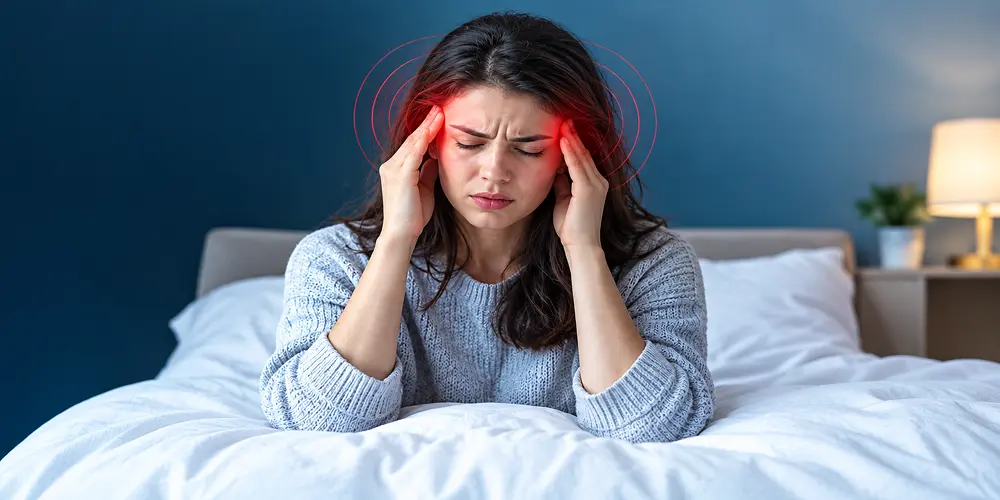
Migraine is a neurological condition that can cause moderate to severe head pain and other symptoms. The pain may feel throbbing or pulsing and can occur on one or both sides of the head.
If you are wondering what a migraine feels like, common symptoms include:
- Moderate to severe head pain.
- Nausea or vomiting.
- Sensitivity to light or sound.
- Sensitivity to smells.
- Dizziness or fatigue.
- Temporary visual or sensory changes called aura.
Migraine can occur in different forms, and the symptoms may vary from person to person. The different types of migraines are mainly distinguished by whether aura is present and how the symptoms develop during an attack.
The two main types are migraine without aura and migraine with aura. Some people experience visual or sensory changes before the head pain, while others do not.
What Causes a Migraine?
There is no single answer to what causes a migraine because several factors can interact.
Genetics can make someone more likely to develop migraine. About 100 genes have been associated with migraine risk. Environmental and lifestyle factors can then influence when an attack occurs.
One useful way to understand this is through the idea of a migraine threshold. Your nervous system may already be more sensitive because of genetics, hormones, poor sleep, or another factor. A combination of triggers can then push the brain past that threshold and start an attack.
Common Migraine Triggers
The most common migraine triggers include:
- Stress or major changes in stress levels.
- Too little or irregular sleep.
- Skipping meals.
- Dehydration.
- Hormonal fluctuations.
- Bright light or strong smells.
- Changes in weather or barometric pressure.
- Alcohol or changes in caffeine intake.
- Certain foods.
- Changes in daily routines.
Not everyone reacts to the same trigger. In fact, several factors may need to occur together before an attack develops.
This is why identifying personal patterns is often more useful than trying to avoid every item on a generic trigger list.
Can Food Trigger a Migraine?
Food is one factor people often investigate when trying to understand what causes a migraine.
Some people report food triggers for migraines, including:
- Alcohol.
- Processed food.
- Artificial sweeteners.
- Caffeine withdrawal.
Food is one factor people often investigate when trying to understand what causes a migraine. Some people report food triggers for migraines, including alcohol, caffeine, or certain processed foods. However, food triggers may not be as common as many people assume. Dr. Vincent Martin of the University of Cincinnati estimates that only about 10% or fewer people with migraines are sensitive to food triggers.
You do not need to eliminate food without a clear pattern. A headache diary can help identify whether a specific food consistently appears before an attack. Regular meals and adequate hydration may also help reduce potential triggers.
Why Do Hormones Cause Migraines?
Hormonal changes are an important part of the causes of a migraine for some people.
Changes in estrogen can affect migraine patterns. This is one reason migraine attacks may become more noticeable around menstruation, pregnancy, or other periods of hormonal change.
What Causes Migraines During Periods?
A drop in estrogen around menstruation can trigger migraine attacks in some people. These attacks may also be longer or more difficult to manage.
If headaches repeatedly occur around the same point in the menstrual cycle, tracking the timing can help identify a pattern.
What Causes Migraines During Pregnancy?
Pregnancy can change migraine patterns, but the experience varies from person to person.
Hormonal changes may improve migraines for some people while attacks continue or change for others. New, severe, or unusual headaches during pregnancy should be discussed with a healthcare professional rather than automatically being attributed to migraine.
What Causes Migraines in Teenagers?
Migraine can affect children and teenagers as well as adults.
During adolescence, hormonal changes can overlap with other potential triggers such as irregular sleep, skipped meals, stress, dehydration, and long periods of sensory stimulation.
If headaches repeatedly interfere with school, sports, sleep, or daily activities, an evaluation can help determine whether migraine is responsible.
How Sleep May Affect Migraine?
Sleep is closely connected with migraine.
Too little sleep, too much sleep, or an inconsistent sleep schedule can make attacks more likely in some people. According to the American Migraine Foundation, sleep apnea may also be more common among people with migraine.
This does not mean that sleep apnea is the cause of every morning headache.
However, recurring headaches combined with loud snoring, gasping during sleep, unrefreshing sleep, or daytime sleepiness may warrant a discussion about sleep health.
How Do You Know If a Headache Is a Migraine?
Migraine symptoms can vary from person to person. Some people have moderate to severe throbbing pain, while others mainly notice nausea, sensitivity to light or sound, dizziness, or visual changes.
Headache & TMJ Treatment
Relieve Pain. Restore Comfort.
Get personalized care for headaches, jaw pain, and TMJ disorders from experienced specialists.
How Migraine Symptoms Differ from Other Headaches?
The pain pattern can help distinguish migraines from other types of headaches. A migraine is more likely to cause throbbing or pulsing pain, often with nausea or sensitivity to light and sound. A tension-type headache usual causes a steady pressure or tightening sensation around the head.
When Do Visual Symptoms Occur?
Visual symptoms can sometimes lead people to use the term “ocular migraine”. However, this term is used inconsistently and may refer to different types of migraine-related visual symptoms. New, sudden, or unusual vision changes should be evaluated by a healthcare professional rather than assumed to be migraine.
Can Migraine Occur Without Head Pain?
Not every migraine includes head pain. Some people experience aura or other migraine symptoms without developing a headache afterward. So, a migraine without a headache is possible, although new or unusual symptoms should be evaluated to rule out other causes.
How Long Does a Migraine Last?
A migraine attack usually lasts 4 to 72 hours when untreated, although the overall experience can include symptoms before and after the headache itself.
Knowing how long a migraine can last helps you recognize whether your symptoms follow a familiar pattern.
There is also no guaranteed instant fix. If you are wondering how to get rid of a migraine fast, the safest approach is to follow a treatment plan recommended for your symptoms rather than repeatedly trying unproven remedies.
When Should a Migraine Be Evaluated?
Most migraine attacks are not life-threatening. However, not every severe headache is a migraine.
Seek urgent medical care for a headache that:
- Starts suddenly and becomes extremely severe.
- Occurs a fever and a stiff neck.
- Causes confusion, seizures, weakness, numbness, or difficulty speaking.
- Causes sudden or significant vision changes.
- Begins after a head injury.
- Is substantially different from your usual headaches.
- Starts for the first time after age 50.
After experiencing severe pain, visual changes, nausea, or other unusual symptoms, you may start wondering, “Is this something serious?” You might also wonder how dangerous a migraine can be, whether it could ever be life-threatening, or how frequent attacks might affect your daily life.
Most migraine attacks are not life-threatening, but sudden or unusual symptoms should be evaluated. Frequent or severe migraine can also interfere with work and daily activities and, in some cases, may be considered disabling.
When May Headaches Overlap with TMJ and Sleep Problems?
Not every recurring headache has the same source.
Jaw tension, teeth grinding, TMJ disorders, and sleep-related problems can contribute to headache symptoms. Denver Sleep Center specifically evaluates headaches & TMJ disorders, including headache patterns associated with jaw tension and TMJ dysfunction.
For appropriate patients, care may include TMJ management and treatments such as Botox for facial muscle pain and headaches.
Dr. Steven Wilk is a triple board-certified specialist in Orofacial Pain and Dental Sleep Medicine with more than 40 years of experience. Denver Sleep Center also provides evaluation for sleep-related conditions that may overlap with recurring headaches.
If headaches occur alongside jaw pain, teeth grinding, snoring, or poor-quality sleep, looking at the bigger picture may help identify contributing factors.
Headache & TMJ Treatment
Relieve Pain. Restore Comfort.
Get personalized care for headaches, jaw pain, and TMJ disorders from experienced specialists.
Conclusion
Understanding what causes a migraine starts with recognizing that there is rarely one single cause. Genetic and neurological factors can create a susceptibility to migraine, while changes in hormones, sleep, stress, hydration, meals, sensory input, weather, and individual food triggers may influence when an attack occurs.
You do not need to avoid every possible trigger. Instead, paying attention to your own patterns can help you identify what may contribute to your attacks and when recurring or changing headaches should be evaluated by a healthcare professional.
FAQs about Migraine
Is migraine very harmful?
Most migraine attacks are not dangerous, but severe, sudden, or unusual headaches should be medically evaluated.
What drink gets rid of migraines?
Water may help if dehydration is contributing to the attack. There is no specific drink that reliably gets rid of a migraine.
Can migraine make you nauseous?
Yes. Nausea and vomiting are common migraine symptoms and can occur with or without severe head pain.
Can migraine cause diarrhea?
It can. Some people experience digestive symptoms, including diarrhea, during a migraine attack.
Is migraine a sign of pregnancy?
Migraine itself is not a sign of pregnancy. However, hormonal changes during pregnancy can affect migraine symptoms.
What is an eye migraine?
“Eye migraine” is not a precise medical term. It may refer to migraine with visual aura or, less commonly, retinal migraine, which can cause temporary vision changes.
