
Key Takeaways:
- Snoring happens when airflow is partially blocked, causing the tissues in your airway to vibrate.
- There are several different types of snoring, including nasal, mouth, tongue-based, throat, positional, and sleep apnea-related snoring.
- Identifying your snoring type can help uncover its underlying cause and guide the most effective treatment.
- Occasional snoring is common, but loud, frequent snoring or breathing pauses may signal a more serious sleep disorder.
- Lifestyle changes can improve mild snoring, while persistent symptoms may require professional evaluation and treatment.
If you’ve ever asked yourself, “Why do I snore?”, you’re not alone. Snoring affects millions of adults and is one of the most common sleep-related concerns. While occasional snoring is often harmless, frequent or loud snoring can sometimes be a sign of an underlying sleep-disordered breathing condition that shouldn’t be ignored.
Many people don’t realize there are several different types of snoring, and each one can point to a different cause. Understanding them can help you identify potential triggers, recognize when lifestyle changes may help, and know when it’s time to seek medical advice.
In this blog, we’ll explain how snoring happens, the most common types of snoring, which type is the most concerning, and the steps you can take to improve your sleep.
How Does Snoring Happen?
Snoring occurs when air struggles to move freely through your airway during sleep.
While you’re awake, the muscles in your tongue, throat, and soft palate help keep your airway open. As you fall asleep, these muscles naturally relax. If the airway becomes too narrow, the passing air causes nearby tissues to vibrate, creating the familiar snoring sound.
Several factors can narrow your airway during sleep, including:
- Nasal congestion from allergies or colds
- Sleeping on your back
- Excess weight around the neck
- Alcohol before bedtime
- Smoking
- Enlarged tonsils
- Age-related muscle relaxation
- Structural differences in the nose or throat
Because these causes vary from person to person, the sound and severity of snoring can vary too. That’s why understanding the classification of snoring is important—it helps identify where the airway is narrowing and what may be causing it.
Types of Snoring Explained
While everyone’s snoring is different, these are the most common types of snoring.
1. Nasal Snoring
What it sounds like: A congested, stuffy, or whistling sound caused by restricted airflow through the nose.
How to identify: You have trouble breathing through your nose, and your snoring gets worse during allergy season, a cold, sinus infection, or if you have a deviated septum.
Potential solutions: Treat allergies, use saline nasal rinses, try nasal strips, or seek treatment for structural nasal problems if symptoms persist.
2. Mouth Snoring
What it sounds like: A dry, open-mouth snore that is often louder than nasal snoring.
How to identify: You sleep with your mouth open, wake up with a dry mouth or sore throat, or have chronic nasal congestion that forces you to breathe through your mouth.
Potential solutions: Improve nasal breathing, use a humidifier if the air is dry, and address the underlying cause of mouth breathing.
3. Tongue-Based Snoring
What it sounds like: A deep, vibrating snore that often becomes louder when sleeping on your back.
How to identify: Your snoring mainly occurs while lying on your back or after drinking alcohol, when the tongue relaxes and partially blocks the airway.
Potential solutions: Sleep on your side, avoid alcohol before bedtime, and maintain a healthy weight to reduce airway obstruction.
4. Throat Snoring
What it sounds like: A loud, heavy, and persistent snore coming from the back of the throat.
How to identify: Your snoring is frequent, loud, and may be associated with enlarged tonsils, excess throat tissue, weight gain, or age-related muscle relaxation.
Potential solutions: Maintain a healthy weight, avoid smoking and alcohol before bed, and consult a sleep specialist if snoring is severe or persistent.
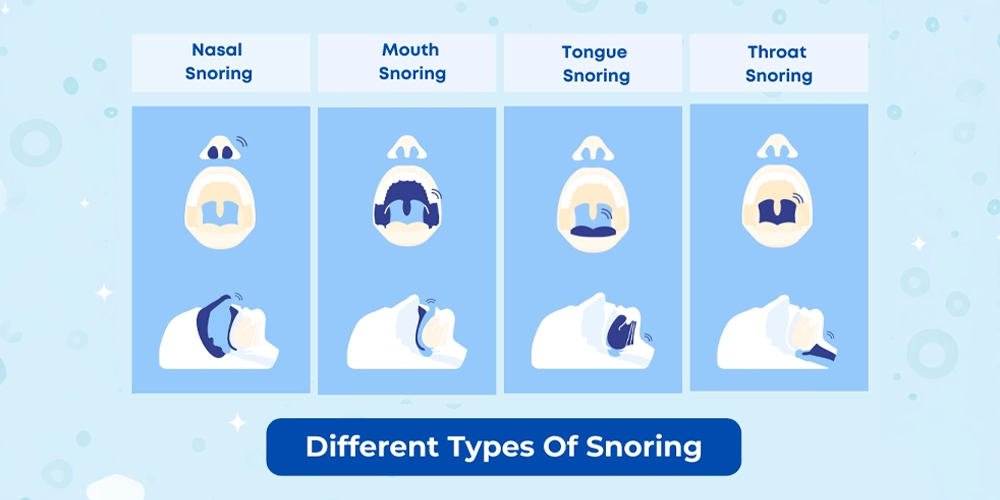
At a Glance: Different Types of Snoring
| Type | Where the Airway Narrows | Common Causes | Can It Be Serious? |
|---|---|---|---|
| Nasal Snoring | Nose | Allergies, sinus congestion, deviated septum | Usually mild |
| Mouth Snoring | Mouth | Mouth breathing, blocked nose | Usually manageable |
| Tongue-Based Snoring | Back of the tongue | Sleeping on the back, muscle relaxation | Sometimes |
| Throat Snoring | Throat and soft palate | Excess tissue, enlarged tonsils, obesity | Can be serious |
| Positional Snoring | Airway changes while lying on the back | Sleeping position | Often improves with position changes |
Which Type of Snoring Is the Most Concerning?
Not all snoring is a cause for concern. Occasional snoring during a cold, allergy flare-up, or after drinking alcohol is common and often improves once the trigger goes away. However, frequent snoring may indicate an underlying airway problem that affects your sleep and overall health.
The most concerning type is snoring linked to obstructive sleep apnea (OSA). Unlike regular snoring, OSA causes repeated pauses in breathing during sleep, reducing sleep quality and increasing the risk of serious health conditions.
Speak with a healthcare provider if your snoring is accompanied by:
- Loud snoring most nights
- Gasping, choking, or pauses in breathing
- Excessive daytime sleepiness
- Morning headaches
- Difficulty concentrating
- High blood pressure
If you’re wondering, “Is snoring bad for you?“, the answer depends on the cause. Occasional snoring is usually harmless, but persistent snoring, especially when associated with sleep apnea, can increase the risk of heart disease, stroke, type 2 diabetes, and other health problems. Early evaluation can help improve your sleep and overall health.
How to Identify Your Snoring Type
Many people don’t realize they snore until someone else tells them. Fortunately, a few simple observations can help you better understand your snoring before visiting a healthcare provider.
- Notice when you snore: Does it happen only when you sleep on your back, during allergy season, or after drinking alcohol?
- Ask your sleep partner: They may notice loud snoring, gasping, pauses in breathing, or frequent tossing and turning.
- Track your sleep: Use a smartphone app or wearable device to record your snoring and identify patterns.
- Keep a sleep diary: Note your sleeping position, bedtime, alcohol intake, allergy symptoms, and how rested you feel each morning.
- Consider a sleep study: If your snoring is frequent or accompanied by breathing pauses, your healthcare provider may recommend a sleep study to check for obstructive sleep apnea.
While these steps can provide useful clues, persistent or severe snoring should always be evaluated by a healthcare professional.
What Causes Snoring and How to Stop It
Snoring happens when airflow is partially blocked during sleep. The best way to reduce it is by treating the underlying cause, which may include:
- Excess body weight
- Nasal congestion
- Sleeping on your back
- Alcohol before bedtime
- Smoking
- Enlarged tonsils
- A deviated septum
- Age-related muscle relaxation
- Obstructive sleep apnea
Healthy Habits That May Reduce Snoring
For mild snoring, these lifestyle changes may help:
- Sleep on your side instead of your back.
- Maintain a healthy weight.
- Avoid alcohol before bedtime.
- Treat allergies and nasal congestion.
- Stay hydrated.
- Keep a consistent sleep schedule.
- Avoid smoking.
When Lifestyle Changes Aren’t Enough
If snoring persists or is linked to sleep apnea, professional snoring treatment may be needed. Depending on the cause, treatment options include oral appliances, CPAP therapy, nasal devices, allergy treatment, or surgery for certain structural airway problems.
Because every case is different, personalized sleep solutions can help address the underlying cause, improve breathing, and support healthier, more restful sleep.
Conclusion
Snoring is common, but it should not always be ignored. Understanding the different types of snoring can help you identify possible causes and decide whether simple lifestyle changes or medical care may be needed. While occasional snoring is often harmless, frequent snoring, breathing pauses, gasping, or excessive daytime tiredness may indicate a more serious sleep disorder such as obstructive sleep apnea. Seeking care early can improve your sleep, overall health, and quality of life.
At Denver Sleep Center, our experienced team provides personalized evaluations and evidence-based treatment options to help you find the cause of your snoring, improve your breathing, and enjoy healthier, more restful sleep.
Frequently Asked Questions
How to stop snoring instantly?
Sleeping on your side, clearing nasal congestion, and avoiding alcohol before bed may provide temporary relief. Persistent snoring should be medically evaluated.
How to stop snoring during pregnancy?
Sleep on your side, stay hydrated, and manage nasal congestion. If snoring is severe or includes breathing pauses, contact your healthcare provider.
How do I get someone to stop snoring?
Encourage healthy sleep habits and treatment of the underlying cause. Frequent or loud snoring should be assessed by a sleep specialist.
How to stop a partner from snoring?
Encourage your partner to sleep on their side and seek medical advice if snoring is persistent or accompanied by breathing pauses. Treating the cause is the most effective solution.
Which type of snoring is the most serious?
Snoring linked to obstructive sleep apnea (OSA) is the most serious because it causes repeated pauses in breathing and can increase the risk of heart disease, stroke, and high blood pressure if left untreated.
